

Andy Burnham needs to make Downing Street work for him - and quickly

By Adam Terry, FGF Deputy Director
Next Monday all eyes will be on Andy Burnham as he steps across the threshold of 10 Downing Street a little over two years after Keir Starmer did the same.
Starmer did not make that journey alone, and nor will Burnham: an incoming prime minister is clapped in by assembled ranks of civil servants already there, and accompanied by the team of political hires they bring with them. It is this mixed team - unique across Whitehall for the high percentage of political appointees - that constitutes the Prime Minister’s office. The way in which it is constructed, its culture set and its effectiveness established will in large part determine the government’s ability to deliver.
Within that team, the Chief of Staff role is critical. Andy Burnham’s pick, former New Labour minister James Purnell, will have the words of his predecessor-but-one Morgan McSweeney ringing in his ears. Earlier this month, McSweeney reflected to the Financial Times on Labour’s readiness for government when coming to power in July 2024 and concluded that ultimately ‘preparation matters more than strategy’.
It’s a striking admission from a man who until now has made very few public interventions, but it’s also not a surprising one. Starmer’s government did not hit the ground running in those famous first 100 days as it would have wanted to. Burnham, Purnell and the team they assemble - who will have less than three years until the next election - cannot afford for that to happen again (nor can progressive politics as a whole).
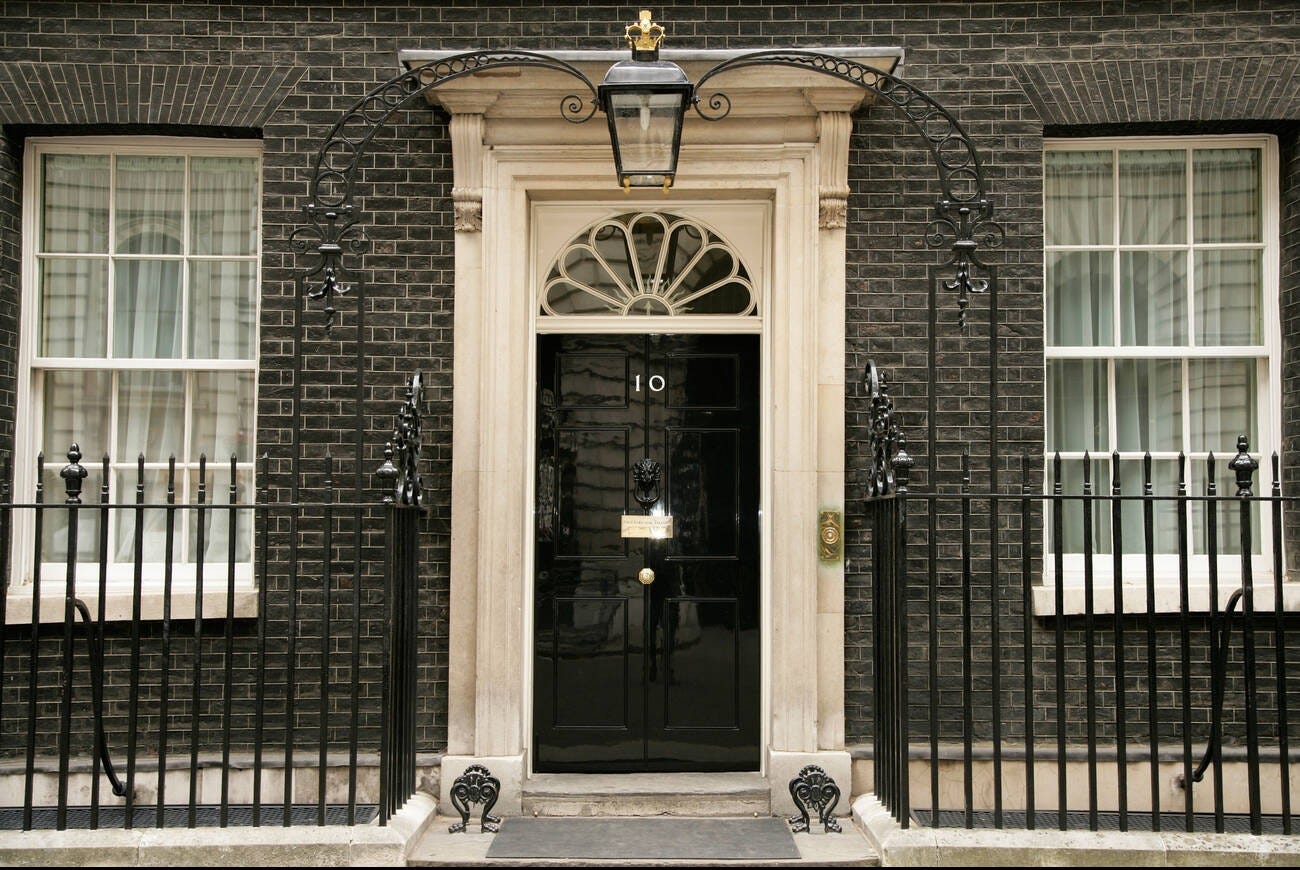
Avoiding that same fate starts with the very centre of government - the core people and powers that the Prime Minister personally has to hand - and that word ‘power’ is critical. As he walks into the famous Number 10 building Andy Burnham needs to inhabit the power that comes with it, and be clear about how he wants to organise that power and what he wants to do with it.
That kind of intentional restructure, of making the centre work for the Prime Minister of the day and his or her political programme, hasn’t been carried out for years. Instead, we’ve had endless ‘make do and mend’, patching up bits of government via quick fixes in moments of crisis, with the result that the state Labour inherited in 2024 had been pulled completely out of shape. This is what McSweeney has said the Starmer administration came to realise but, by his own admission, too late - and which in the end it did not do enough to change.
Burnham now has the opportunity, and the obligation, to rectify that. Like all Prime Ministers it is in his gift to change how government works - but he has to want to do so and he has to prioritise that work for what it is: the essential precursor to getting everything else done, not a technocratic ‘nice to have’ which forever falls down the to-do list.
He clearly gets this, talking confidently in Manchester of the need for ‘a more streamlined state with a clearer purpose’, with his new No.10 North acting as ‘the nerve centre for a rewired Britain’. So what should the ‘nerve centre’ of the Prime Minister’s Office look and feel like? It’s a question we set out to answer last year in our report In Power 01: Transforming Downing Street.
For the project, we spoke to over 100 experts, including people who work, or have worked, within the centre of government, in the UK and in other countries, those who interact with the centre from different parts of national or local government, who are experts in organisational psychology and design, and who have worked in roles at the top of large multinational corporations or complex civil society organisations.
From those conversations we identified three main dynamics affecting the centre of government, and which an incoming Prime Minister can and must change
1. A lack of clarity about the division of responsibilities across the centre
For years now, duplicative teams serving the Prime Minister in Number 10 and the Cabinet Office have often operated in rivalry with one another, undermining the centre’s ability to issue clear instructions across the system.
Burnham should pull the Cabinet Office’s central coordination functions into Downing Street, rationalising domestic and foreign policy teams into powerful units led by heavyweight people who are able to go toe to toe with permanent secretaries and Directors General across Whitehall. This would end the confusion and infighting, and give the Prime Minister’s office the heft it needs to run his writ across the system.
In this context, Burnham’s ‘No.10 North’ is a real opportunity - a chance to reset many of those dynamics and make the delineation of functions both clear and highly visible. Though it’s also important to note that its creation doesn’t on its own change the fundamentals of the centre of government; and arguably, if the new operation doesn’t go hand-in-hand with greater clarity over roles and responsibilities, then ambiguity plus 200 miles of physical distance could well make it worse.
2. The centre has tended to operate on a single rhythm: the here and now
We found that the building is constantly buffeted by events, which everyone is drawn into responding to, in turn crowding out space for the long-term thinking that is fundamental to good government.
As an antidote to short-termism, Number 10 needs a proper strategy function, insulated from day-to-day crisis management, free to think about the major, complex and often multi-decade challenges facing the country, as well as the political and policy implications involved in addressing them.
In our report last year, we recommended a standalone Politics and Strategy Group, sitting alongside other functions dedicated to policy and delivery, diplomacy and security, as well as the core private office and other functions involved in running a world class prime ministerial operation. Whatever the eventual configuration, a team of people with the capability and licence to think both politically and strategically is essential.
3. Culturally, Number 10 has a tendency to turn inward and close itself off from the rest of Whitehall
The sense of being in a state of permanent crisis can create a ‘bunker’ mentality which does not bring out the best in the people. A proper cultural reset is needed, with the emphasis being on looking outwards - of bringing the country together and accepting that not all the answers (and certainly not all the ‘levers’, that most unhelpful of governing metaphors) are to be found within a single building in SW1.
The centre should do what it does best, and what only it can do: set a clear, unambiguous direction. But beyond that, it should stop trying to do so much itself and instead build the coalitions needed to deliver, and empower them to get on with it. As we often say at FGF: lead with purpose, and govern in partnership.
Again, there are encouraging signs here from the likely next Prime Minister: in his first major address to the country he made clear that ‘the political direction I set will not be up for negotiation’, but that beyond that he would build a more inclusive team and a healthier culture at the top of government. And he has consistently argued that a core element of his beloved ‘Manchesterism’ is the state working in partnership with business, civil society, academia and communities themselves to bring about change.
In the end, this is about political will: the will to challenge the status quo, the will to make the tough decisions necessary to break with it - especially when those decisions elicit loud cries from those who look set to lose power as a result - and the will to act. That’s true when it comes to tackling a whole host of policy challenges, but it’s equally true of changing the state itself - and the former simply cannot happen without the latter.
Moving into a new house usually means making it your own. Number 10 Downing Street is no exception.
All very sensible, but it ignores the role of the media in distorting, even disrupting, almost everything?